25 DAYS 02 HRS 37 MINS 40 SECS UNTIL LIGHT TO UNITE

Honor the Flag

The Flag

Appreciation, respect, and understanding. Educating the next generation of Americans on the heritage, etiquette, and stories of the US Flag.

Heritage

History & Evolution

When the Flag was first recognized by Congress in 1777, it did not have the familiar thirteen stripes and fifty stars it does today. Since independence, it has been revised twenty-seven times, a living record of a nation that kept growing.

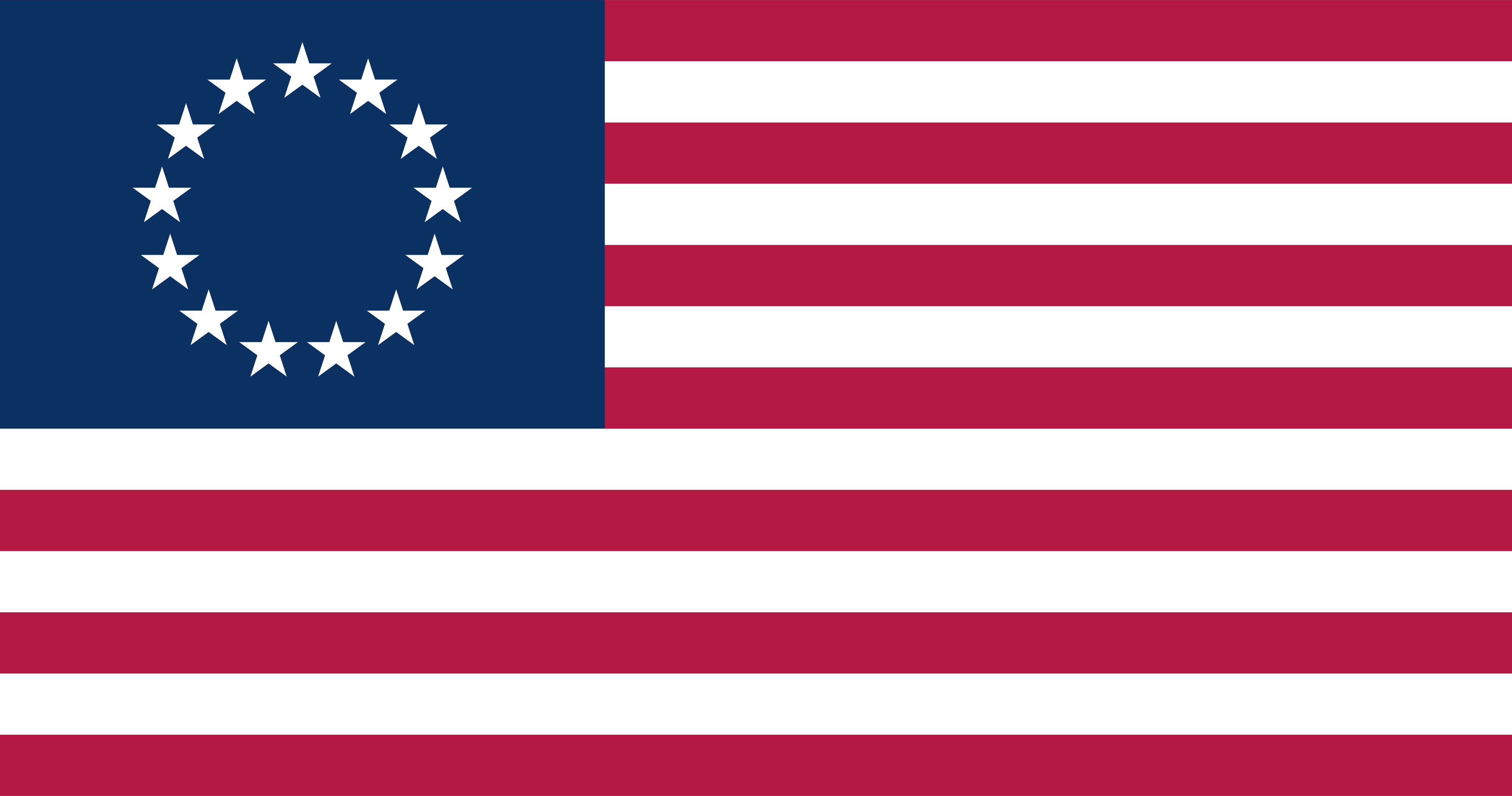
  1. The U.S. Flag in 1777
    1777

    A Flag for a new nation

    On June 14, 1777, the Continental Congress resolved that the Flag of the United States be thirteen stripes, alternate red and white, with thirteen white stars on a blue field, one for each of the original colonies.

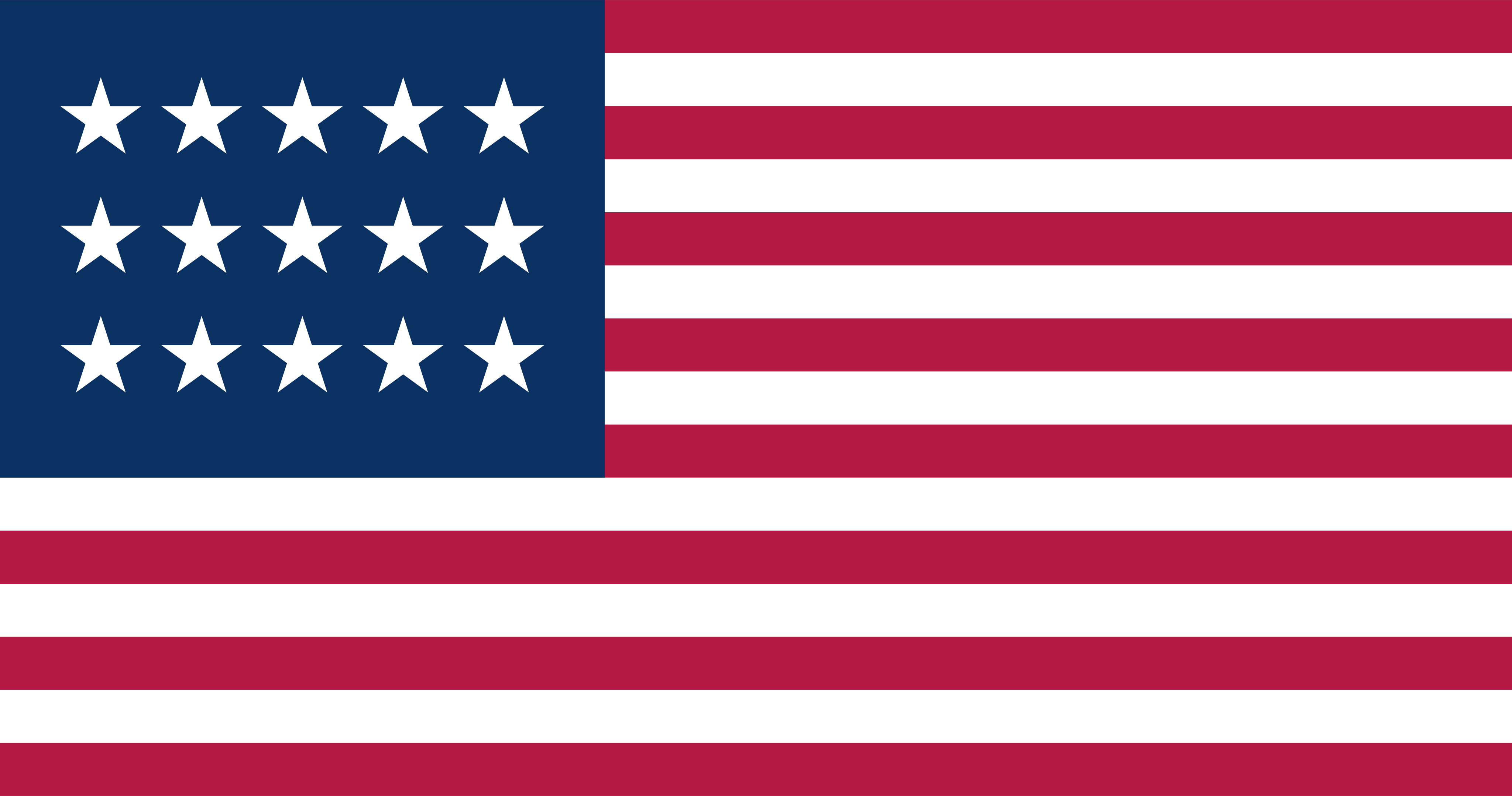
  2. The U.S. Flag in 1795
    1795

    Fifteen stars and stripes

    With Vermont and Kentucky joining the Union, the Flag grew to fifteen stars and fifteen stripes, the version that flew over Fort McHenry and inspired “The Star-Spangled Banner.”

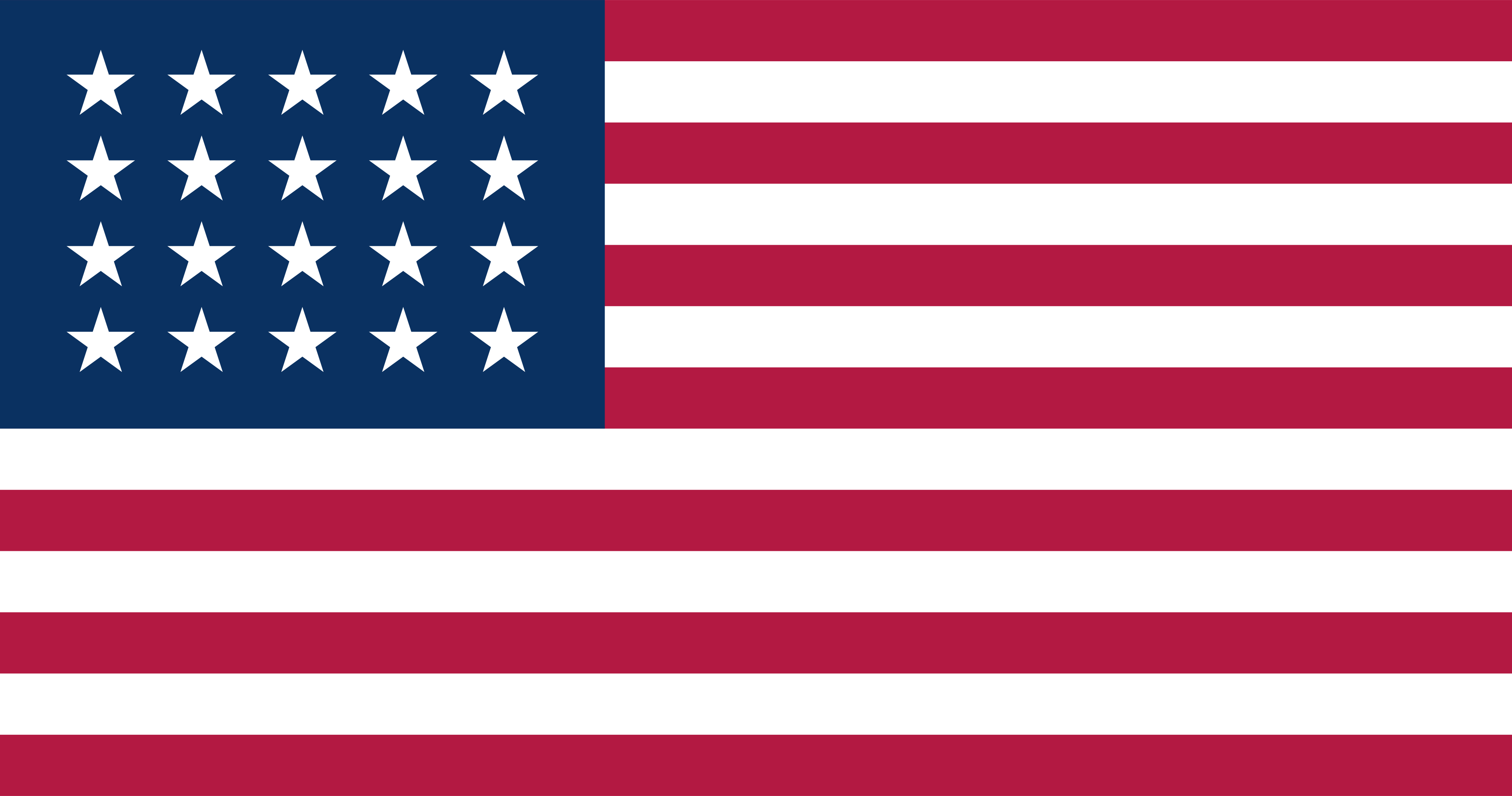
  3. The U.S. Flag in 1818
    1818

    Return to thirteen stripes

    Congress restored the thirteen stripes to honor the original colonies, and provided that a new star be added for each new state on the Fourth of July following its admission.

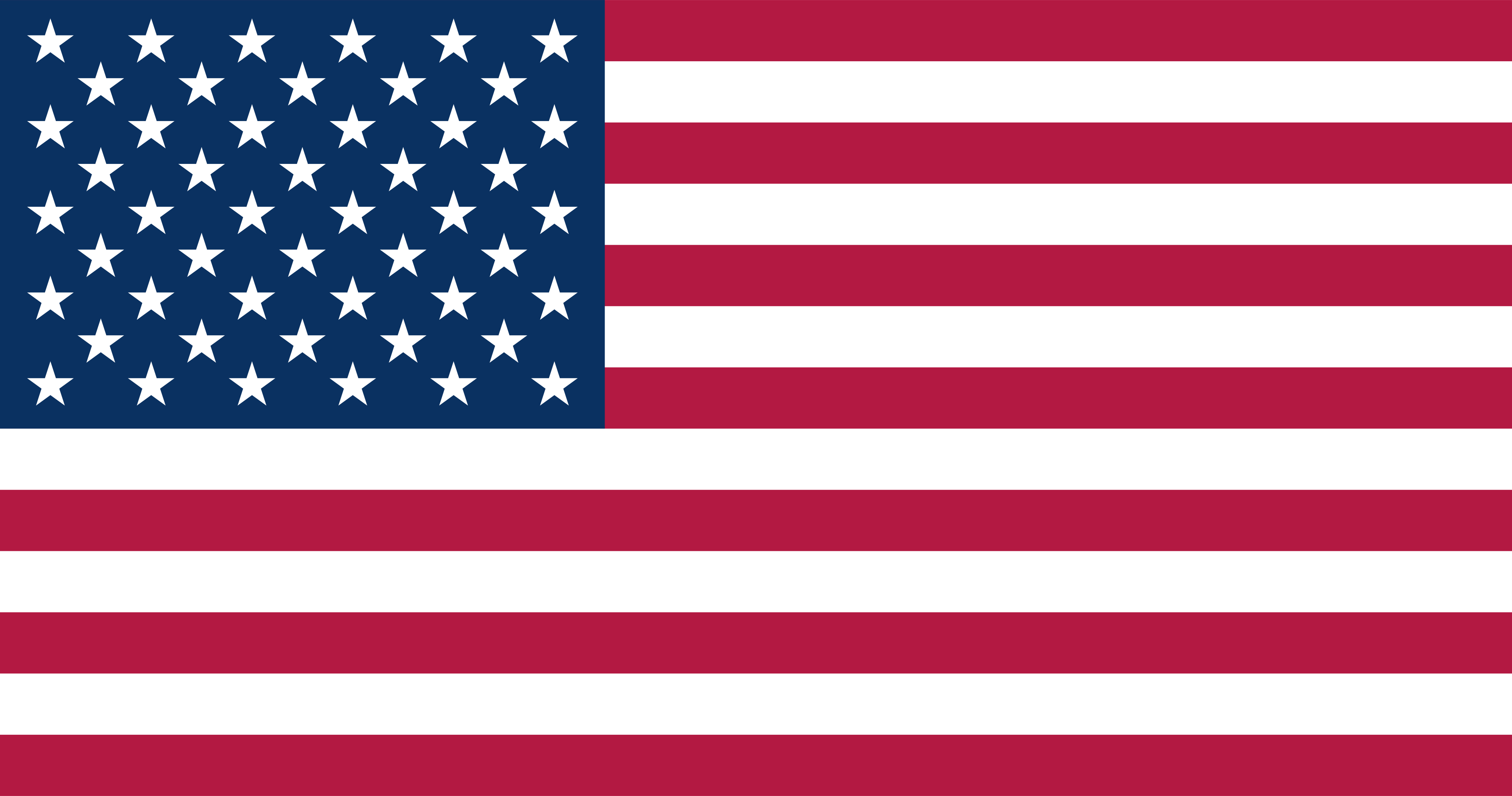
  4. The U.S. Flag in 1960
    1960

    Fifty stars

    With Hawaii’s admission, the Flag reached its familiar fifty stars. Since independence, the national Flag has been revised twenty-seven different times.

Etiquette

Care, handling & respect

Know how to properly care for, handle, display, and respect your American Flag per the U.S. Flag Code. Appropriate etiquette is the responsibility of every American.

Displaying the Flag

When displayed flat or hung vertically, the union (the field of stars) is always uppermost and to the Flag’s own right, the observer’s left. The Flag should be lit if displayed at night.

Raising & lowering

The Flag should be hoisted briskly and lowered ceremoniously. It is customarily displayed from sunrise to sunset, and may fly twenty-four hours a day if properly illuminated.

The Flag at half-staff

To place the Flag at half-staff, first hoist it to the peak for an instant, then lower it to the half-staff position. Before lowering for the day, raise it again to the peak.

The Flag in mourning

Half-staff is reserved for occasions designated by the President or a state’s governor. On Memorial Day, the Flag flies at half-staff until noon, then is raised to full staff.

Folding the Flag

The Flag is folded lengthwise twice, then folded in triangles from the striped end to the union, until only the blue field shows, a reminder of the soldiers who served under it.

General care

A weathered Flag may be washed or dry-cleaned and mended. Keep it clean and dry, and never let it touch the ground, the floor, water, or anything beneath it.

Retiring a Flag

When a Flag is no longer a fitting emblem of display, it should be destroyed in a dignified way, preferably by burning. Many American Legion and VFW posts hold retirement ceremonies.

The Flag at events

During the National Anthem or Pledge, face the Flag and stand at attention; those in uniform render the military salute. The Flag should never be used as apparel, bedding, or drapery.

Read the full U.S. Flag Code 4 U.S.C. §§ 6–9

When to display the Flag 4 U.S.C. § 6

  • The Flag is customarily displayed only from sunrise to sunset. It may be displayed twenty-four hours a day if properly illuminated during the hours of darkness.
  • The Flag should not be displayed on days when the weather is inclement, except when an all-weather Flag is used.
  • The Flag should be displayed on all days, and especially on New Year’s Day, Inauguration Day, Martin Luther King Jr. Day, Lincoln’s and Washington’s Birthdays, Easter Sunday, Mother’s Day, Armed Forces Day, Memorial Day (half-staff until noon), Flag Day (June 14), Independence Day, Labor Day, Constitution Day (September 17), Columbus Day, Navy Day, Veterans Day, Thanksgiving, Christmas, and the birthdays and admission days of the several States.
  • The Flag should be displayed daily on or near the main administration building of every public institution, in or near every polling place on election days, and in or near every schoolhouse during school days.

How to display the Flag 4 U.S.C. § 7

  • When carried in a procession with other flags, the Flag should be on the marching right or in front of the center of the line.
  • When displayed with another flag against a wall from crossed staffs, the Flag should be on its own right (the observer’s left), with its staff in front of the other.
  • When flown with the flags of States, cities, or organizations on the same halyard, the Flag of the United States should always be at the peak; on adjacent staffs, it should be hoisted first and lowered last.
  • No other flag may be placed above the Flag of the United States, or to its right. When displayed with the flag of another nation, the flags should be of equal size, flown from separate staffs of equal height.
  • When displayed flat or hung vertically, the union (the field of stars) is always uppermost and to the Flag’s own right, the observer’s left.
  • When displayed over a street, the union should face north on an east-west street, or east on a north-south street.
  • When used to cover a casket, the union is placed at the head and over the left shoulder. The Flag is never lowered into the grave or allowed to touch the ground.
  • The Flag should never be displayed with the union down, except as a signal of dire distress in instances of extreme danger to life or property.

Respect for the Flag 4 U.S.C. § 8

  • The Flag should never touch anything beneath it, such as the ground, the floor, water, or merchandise.
  • The Flag should never be carried flat or horizontally, but always aloft and free.
  • The Flag should never be used as apparel, bedding, or drapery, nor festooned or drawn back in folds. For decoration, use bunting of blue, white, and red.
  • The Flag should never have placed upon it, nor on any part of it, any mark, insignia, letter, word, figure, design, picture, or drawing of any nature.
  • The Flag should never be used as a receptacle for receiving, holding, carrying, or delivering anything.
  • The Flag should never be used for advertising purposes, nor embroidered on cushions or handkerchiefs, printed on napkins or boxes, or used on any costume or athletic uniform — though a Flag patch may be worn by military personnel, firefighters, police officers, and members of patriotic organizations.
  • The Flag should never be dipped to any person or thing.
  • When a Flag is in such condition that it is no longer a fitting emblem for display, it should be destroyed in a dignified way, preferably by burning.

During hoisting, lowering, or passing 4 U.S.C. § 9

  • During the hoisting, lowering, or passing of the Flag, all present should face it and stand at attention with the right hand over the heart.
  • Those in uniform should render the military salute. Members of the Armed Forces and veterans not in uniform may render the military salute.
  • Men not in uniform should remove their headdress with the right hand and hold it at the left shoulder, the hand being over the heart.

The Flag Code is established in Title 4 of the United States Code. It is a guide for all handling and display of the Stars and Stripes, voluntary for citizens. This is a faithful summary of its principal provisions. For the complete guide, including flying the Flag at half-staff and answers to common questions, see the full U.S. Flag Code.

Stories

The story of a country and its people

Intertwined within the threads of red, white, and blue lies a story of a country and its people. Behind every Flag is a person, a family, a moment worth remembering.

Share your Flag story

Tell us what the Flag means to you, a memory, a tribute, a moment of service. With your permission, we may share it to inspire others across the country.